
Press GO to launch the walk step by step feature
 Mark as Visited
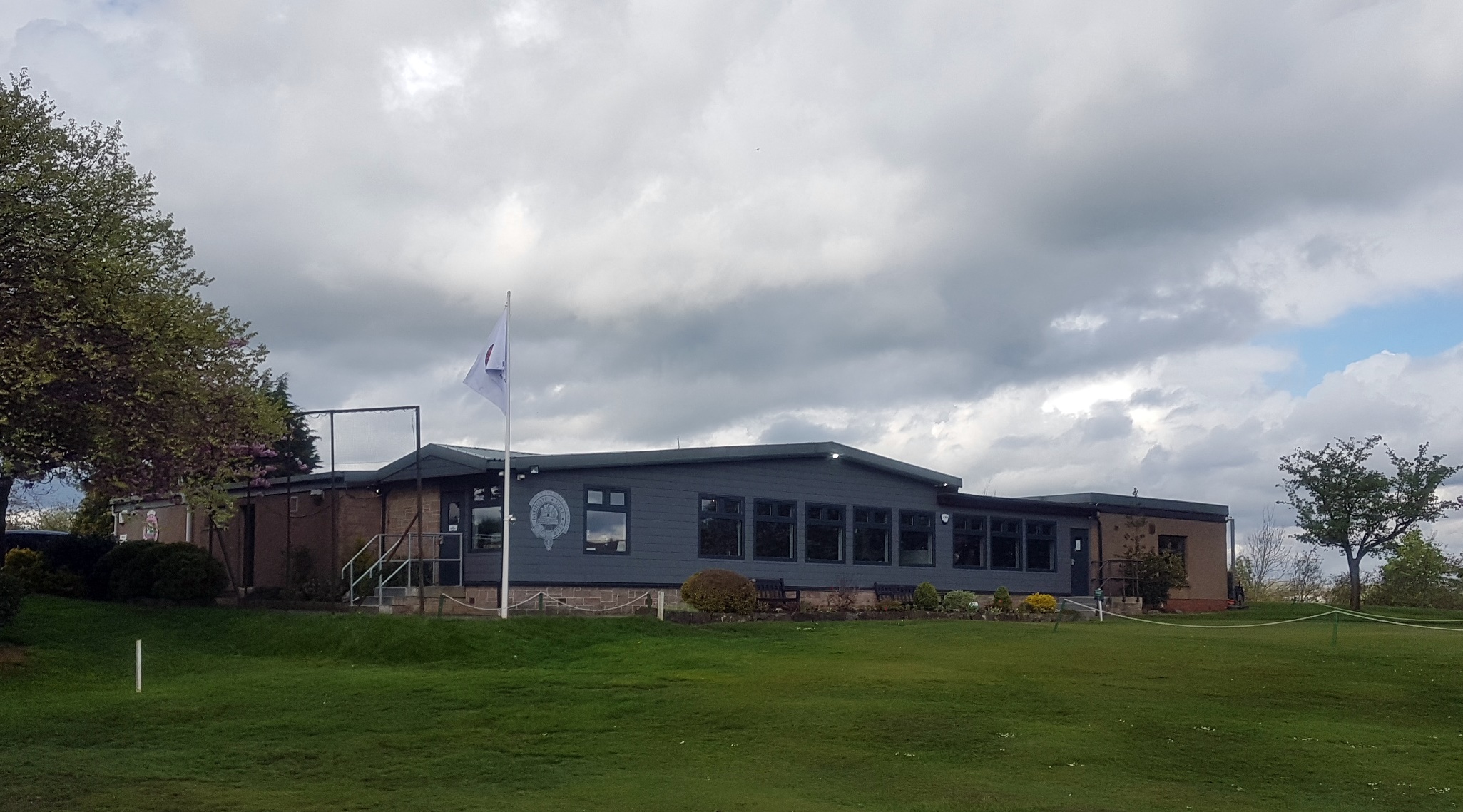
Bathgate Golf Club
Bathgate
Points of interest on route
Bathgate Golf Club opened for play on 22nd June 1892. The original 9 hole course was designed by Willie Park Jnr of Musselburgh, a 2 times Open Champion and son of the first ever Open Champion, Willie Park Snr. It was enlarged to 18 holes in 1907 with upgrades by 5 times Open Champion and prolific course designer James Braid. A further redesign took place after losing holes to the BMC factory in 1961, with more changes being made in the mid 1970’s.
The Club holds a unique and proud distinction in world golf in that three European Ryder Cup team members honed their golf games here: Eric Brown (Captain 1969 and 1971), Bernard Gallacher OBE (Captain 1991, 1993, 1995) and Bernard’s nephew Stephen Gallacher. The club produced many other great players, notably 11 times Club Champion and Scottish Senior Champion John McLean. Other esteemed members have included Rev. Lindsay, philanthropist and Minister of St John’s Church, John Macnab, owner of Glenmavis Distillery, and Macbeth Menzies, owner of Menzies Steel Foundry and club benefactor.
 Mark as Visited
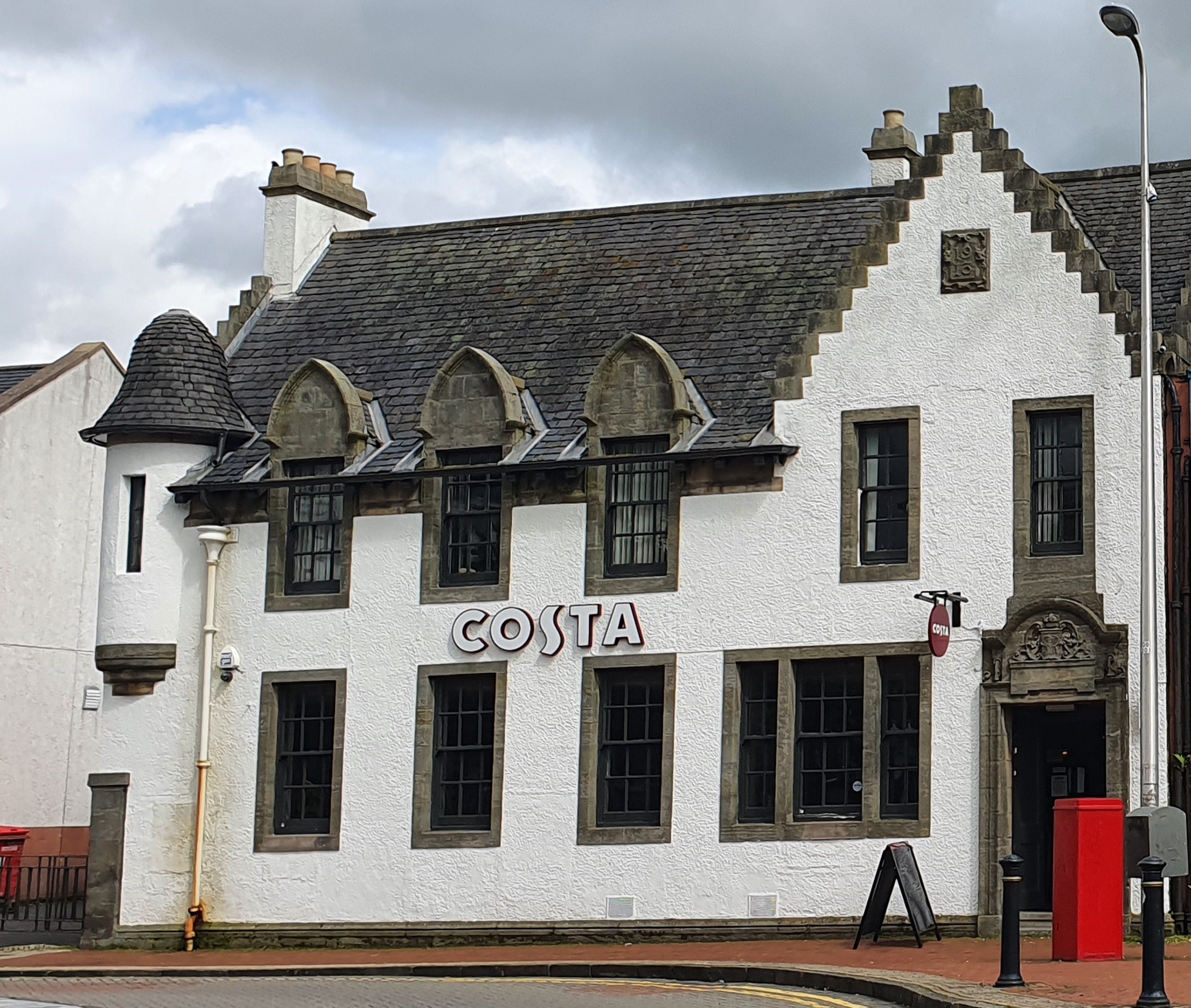
Post Office
Edinburgh Road, Bathgate
Nestled in the heart of Bathgate, the post office stands as a beacon of connectivity, where parcels and letters weave tales of love, hope, and anticipation. Its doors welcome all, bridging distances and nurturing the timeless tradition of correspondence with warmth and efficiency.
Points of interest on route
This former Post Office was built in 1913 by W T Oldrieve who worked on many post offices for HM Ministry of Works in the early 20th century. In 1904 he was appointed Principal Architect for Scotland. This is an unusual example of his work, distinguished Scots Revival in style, harled, with stone margins, fine dormer windows, corner turret and carved entrance doorway. Bathgate’s first purpose-built Post Office had opened in 1895 in Hopetoun Street until it was replaced by this one which opened in 1914. It remained here until 1977 when it moved to new premises in North Bridge Street. The Clydesdale Bank took over the premises but closed its doors in 2017. It became a Costa Coffee house in 2018.
 Mark as Visited
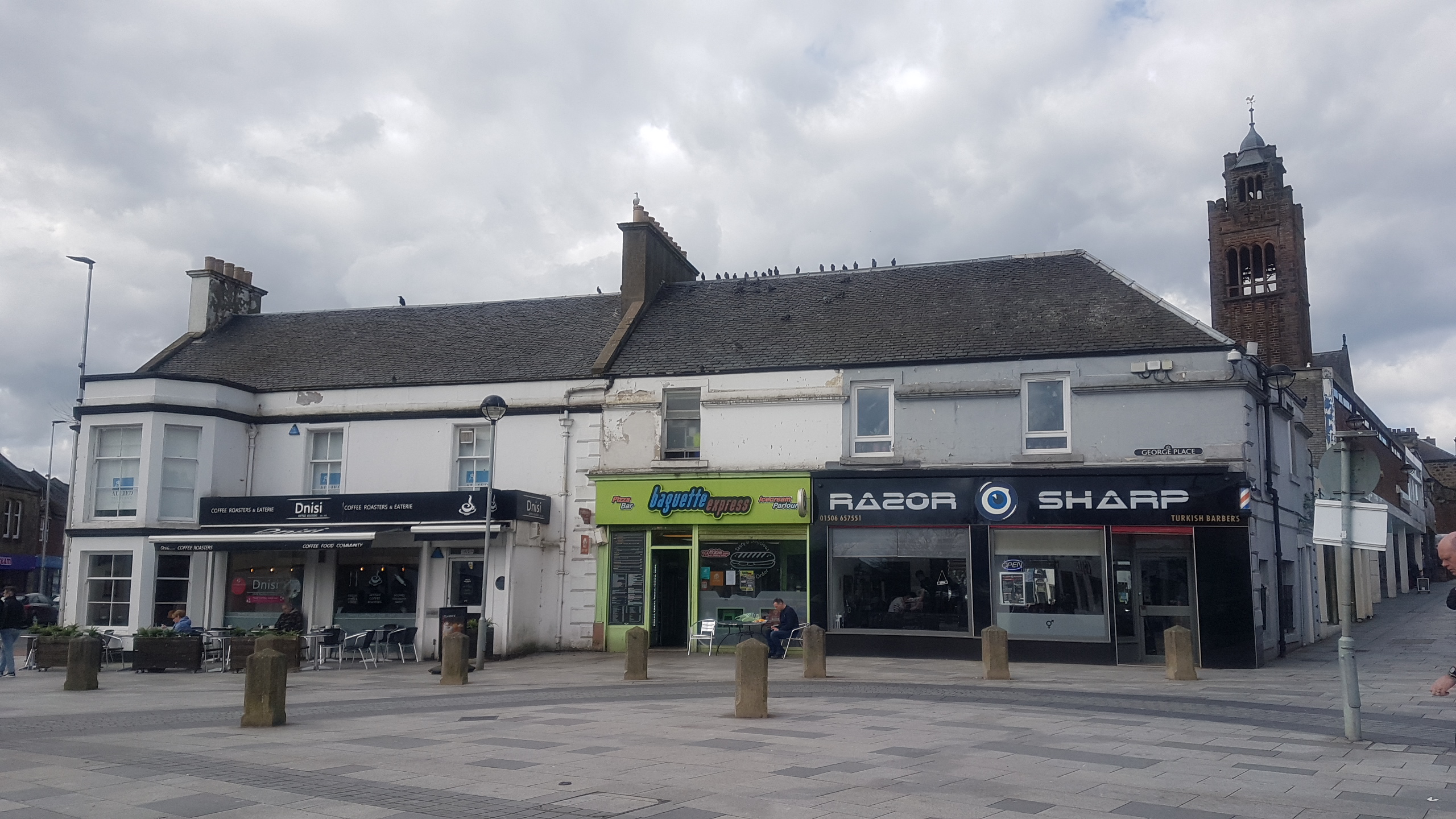
Royal Hotel
Bathgate
Overlooking Bathgate's bustling streets, the Royal Hotel exudes timeless elegance and hospitality, inviting travelers to indulge in a blend of historic charm and modern comfort. With its rich heritage and central location, it stands as a gracious host, welcoming guests to experience the warmth of Scottish hospitality.
Points of interest on route
Formerly the Royal Hotel, this building dates from the 1870s. It was a stopping point for the daily Edinburgh – Glasgow stagecoaches. Robert Louis Stevenson lunched here in 1879, mentioning his visit in a letter to a friend. He wrote some verses for the serving maid who declared them “no bad for a beginner”. He also wrote a declaration in verse for the landlord’s daughter, Miss Stewart, who went on to marry Henry Gordon, brother of DR Gordon, a former Bathgate provost and owner of the local hardware shop. By 1900 ownership had transferred to the White family when it became known as White’s Hotel. In 1919 the hotel was bought by National Bank and the adjacent livery stables had been purchased by Bathgate Motor Co and turned into a garage. Bathgate Boy’s Club met here in the 1940s and 1950s.
 Mark as Visited
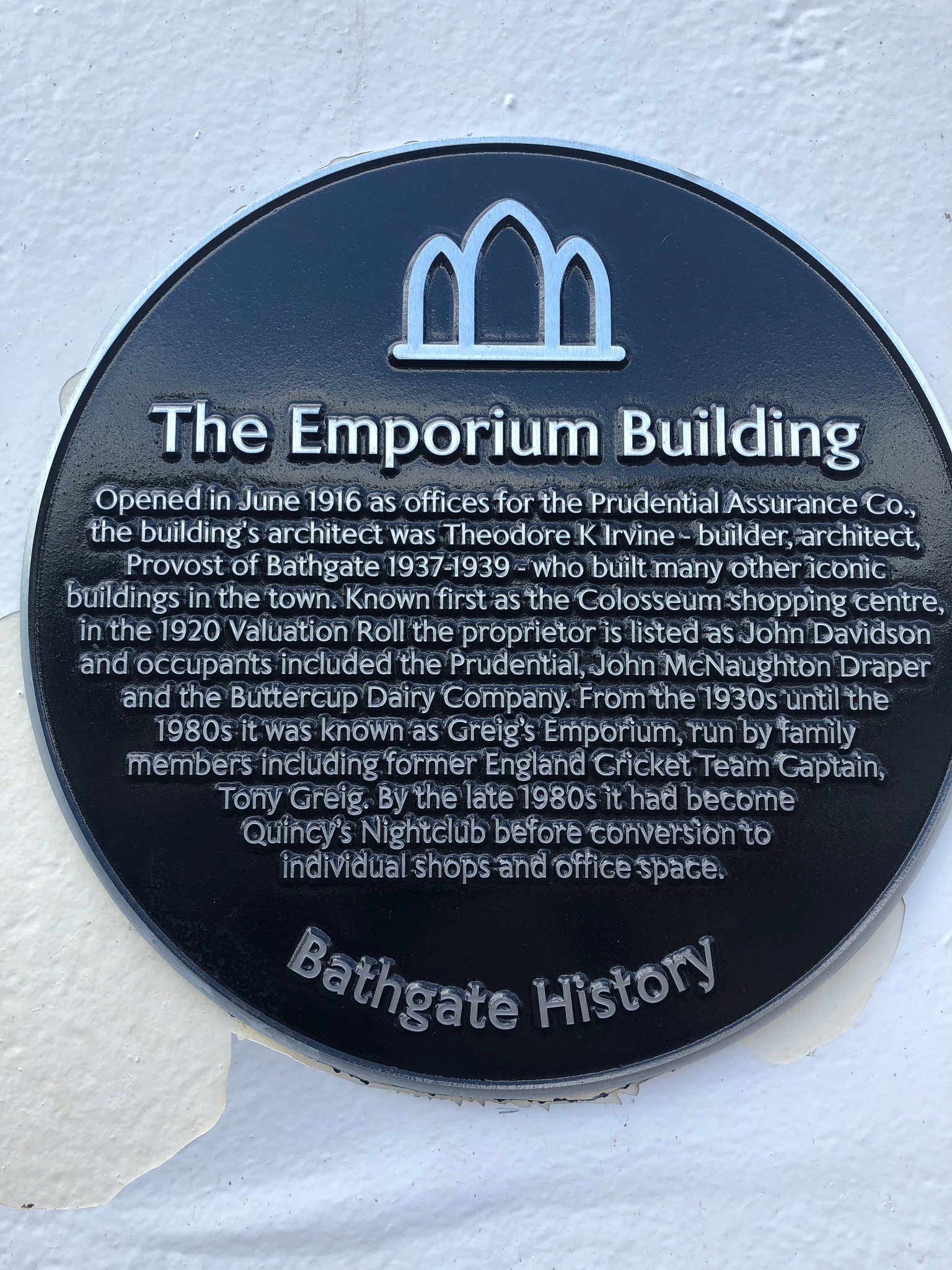
Emporium Building
Bathgate
As the cornerstone of Bathgate's architectural legacy, the Emporium Building, now Nautica, stands tall, a testament to the town's vibrant past and enduring spirit of commerce. Its ornate façade whispers tales of bygone eras, inviting visitors to explore its eclectic blend of shops and stories.
Points of interest on route
Opened in June 1916 as offices for the Prudential Assurance Co., the building's architect was Theodore K Irvine - builder, architect, Provost of Bathgate 1937-1939 - who built many other iconic buildings in the town. Known first as the Colosseum shopping centre, in the 1920 Valuation Roll the proprietor is listed as John Davidson and occupants included the Prudential, John McNaughton Draper and the Buttercup Dairy Company. From the 1930s until the 1980s it was known as Greig’s Emporium, run by family members including former England Cricket Team Captain, Tony Greig. By the late 1980s it had become Quincy’s Nightclub before conversion to individual shops and office space.
 Mark as Visited
Livingstone's Hosiery
Bathgate
Amidst the hum of machinery, Livingstone’s Hosiery weaves threads of tradition and innovation, crafting garments that epitomize Bathgate's industrial legacy. Steeped in history and craftsmanship, it stands as a testament to the town's ingenuity and enduring craftsmanship.
Points of interest on route
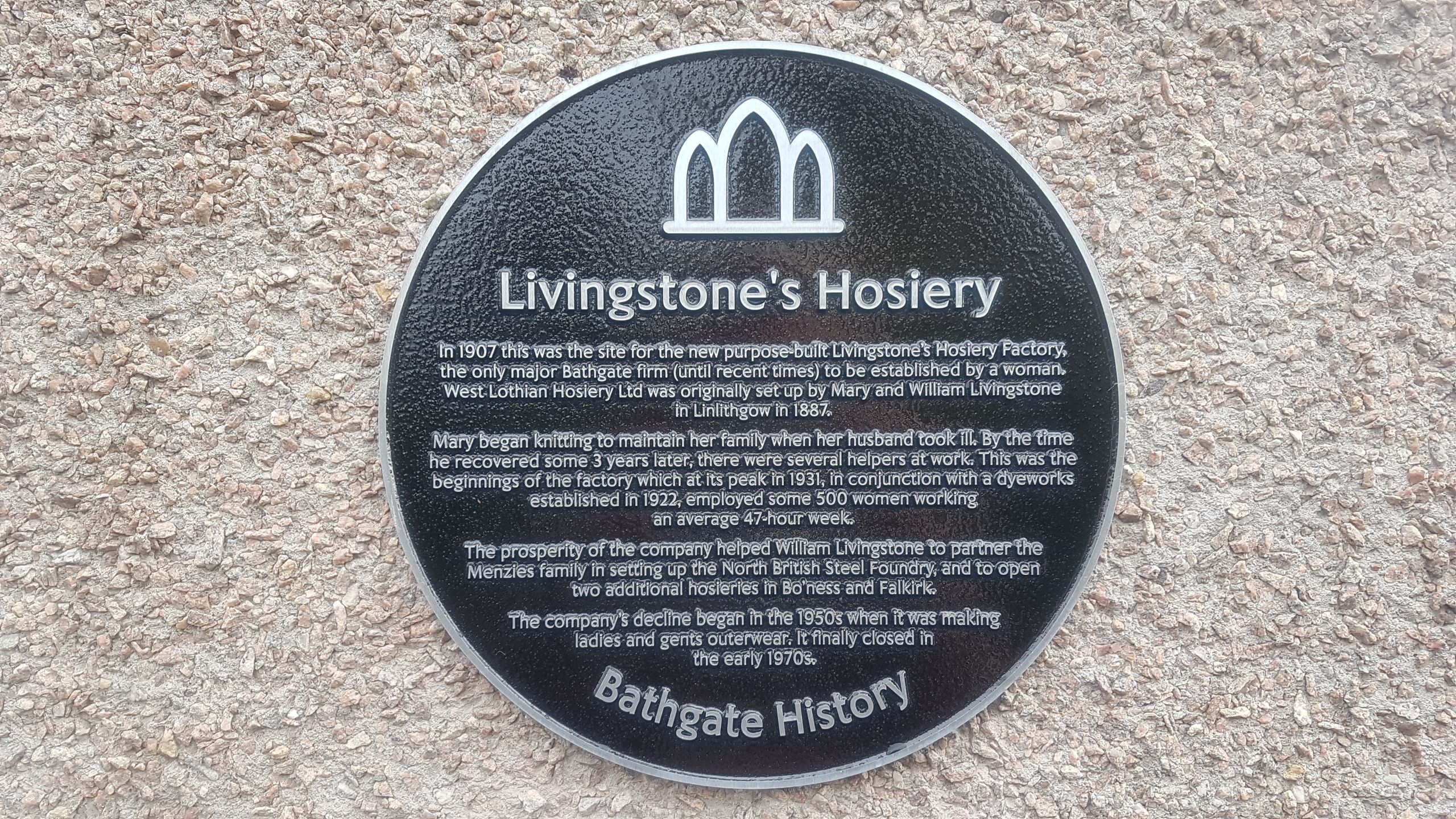
In 1907 this was the site for the new purpose-built Livingstone’s Hosiery Factory, the only major Bathgate firm (until recent times) to be established by a woman. West Lothian Hosiery Ltd was originally set up by Mary and William Livingstone in Linlithgow in 1887.
Mary began knitting to maintain her family when her husband took ill. By the time he recovered some 3 years later, there were several helpers at work. This was the beginnings of the factory which at its peak in 1931, in conjunction with a dyeworks established in 1922, employed some 500 women working an average 47-hour week.
The prosperity of the company helped William Livingstone to partner the Menzies family in setting up the North British Steel Foundry, and to open two additional hosieries in Bo’ness and Falkirk.
The company’s decline began in the 1950s when it was making ladies and gents outerwear. It finally closed in the early 1970s.
 Mark as Visited
Bargaly House
Bathgate
Tucked away amidst lush greenery, Bargaly House exudes timeless grandeur and tranquility, offering a serene retreat from the bustle of modern life. With its graceful architecture and idyllic surroundings, it beckons visitors to unwind and savor the timeless charm of rural Scotland.
Points of interest on route
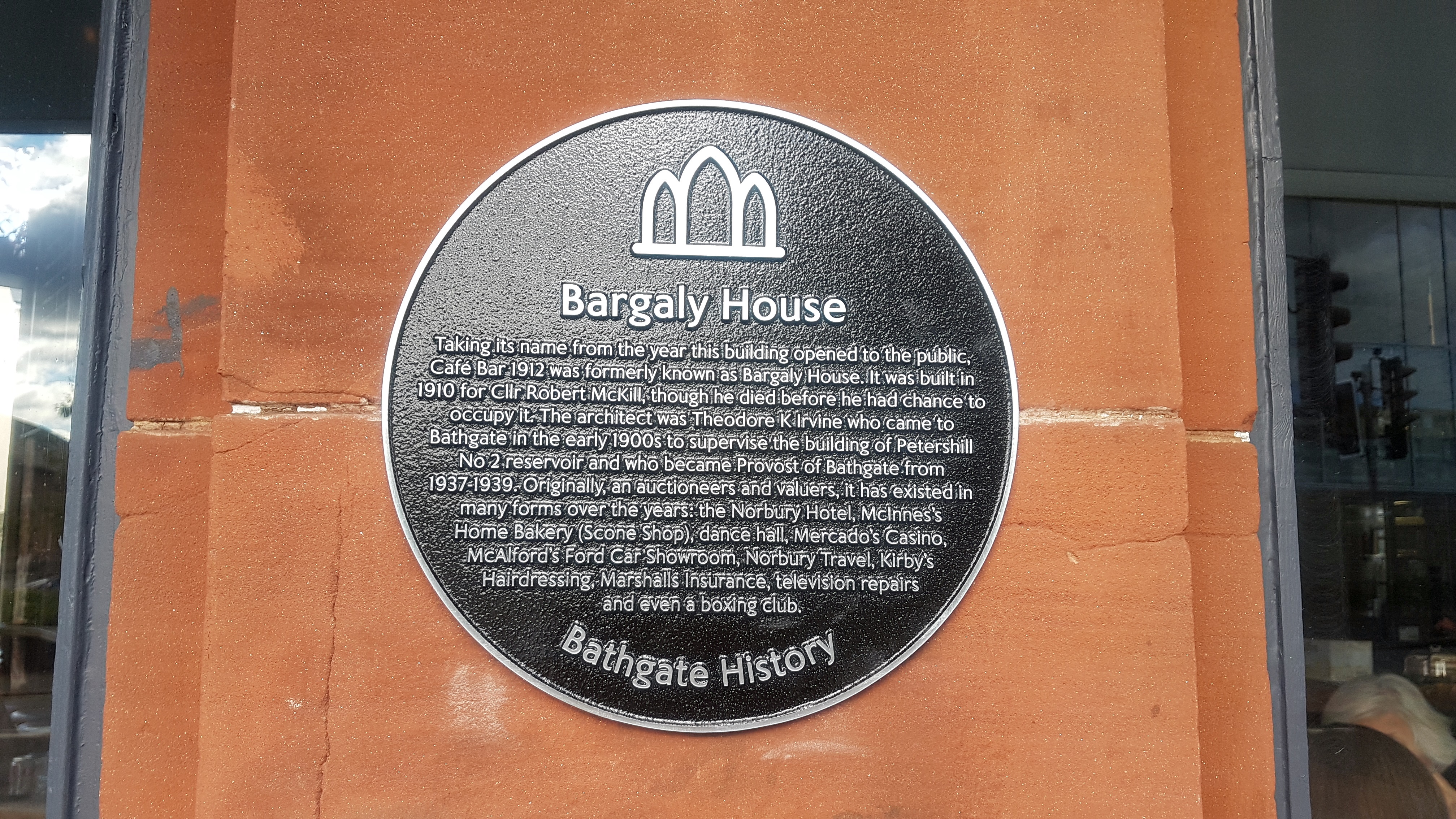
Taking its name from the year this building opened to the public, Café Bar 1912 was formerly known as Bargaly House. It was built in 1910 for Cllr Robert McKill, though he died before he had chance to occupy it. The architect was Theodore K Irvine who came to Bathgate in the early 1900s to supervise the building of Petershill No 2 reservoir and who became Provost of Bathgate from 1937-1939. Originally, an auctioneers and valuers, it has existed in many forms over the years: the Norbury Hotel, McInnes’s Home Bakery (Scone Shop), dance hall, Mercado’s Casino, McAlford’s Ford Car Showroom, Norbury Travel, Kirby’s Hairdressing, Marshalls Insurance, television repairs and even a boxing club
 Mark as Visited
Regal Theatre
Bathgate
Bathgate's cultural heartbeat pulsates within the walls of the Regal Theatre, where the magic of performance and artistry takes center stage. With its rich history and vibrant programming, it serves as a cherished gathering place, uniting audiences in the joy of live entertainment and artistic expression.
Points of interest on route
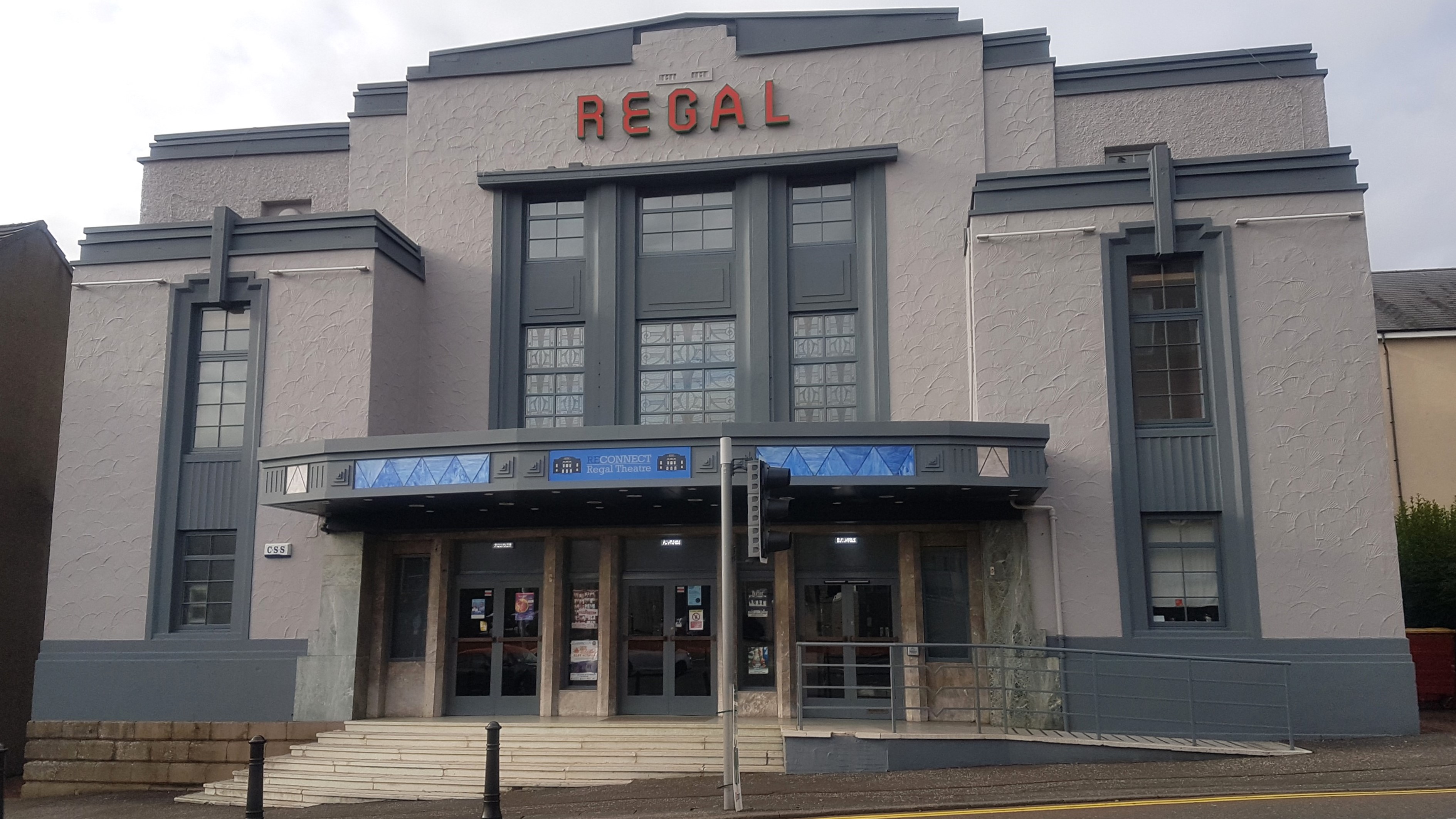
This former cinema opened in 1938, seating 1067. The first film shown was The Adventures of Robin
Hood, starring Errol Flynn and Olivia De Haviland. Its exterior is very much as when originally built, a
fine symmetrical Art Deco composition with classical overtones. It is the finest remaining example of
A D Haxton's (1878-1961) cinema designs. Between 1914 and 1955, Haxton's practice worked
extensively designing cinemas in Fife and West Lothian of which only 3 survive but in much altered
form. Interior designer John Alexander (1888-1974) specialised in flamboyant interiors for
restaurants, ballrooms and cinemas, combining boldly modelled plaster work, decorative carpets,
upholstery and curtains, ornate paint schemes and dramatic lighting. Here his outstanding modelled
plaster panels are rare, being one of only two remaining examples of his work in the UK (the other at
the Northwick Cinema, Worcester), making the Regal of far more than just local interest. They depict
a nude chariot rider driving his horse into the sky. The controversy of this theme delayed the
cinema’s opening by several days while it was determined if such images were acceptable in a public
place.
 Mark as Visited
Bathgate Weaving Industry
Bathgate
Woven into the fabric of Bathgate's history, the weaving industry stands as a testament to the town's industrious spirit and craftsmanship. From looms to textiles, its legacy continues to thread through generations, a tapestry of innovation and tradition.
Points of interest on route
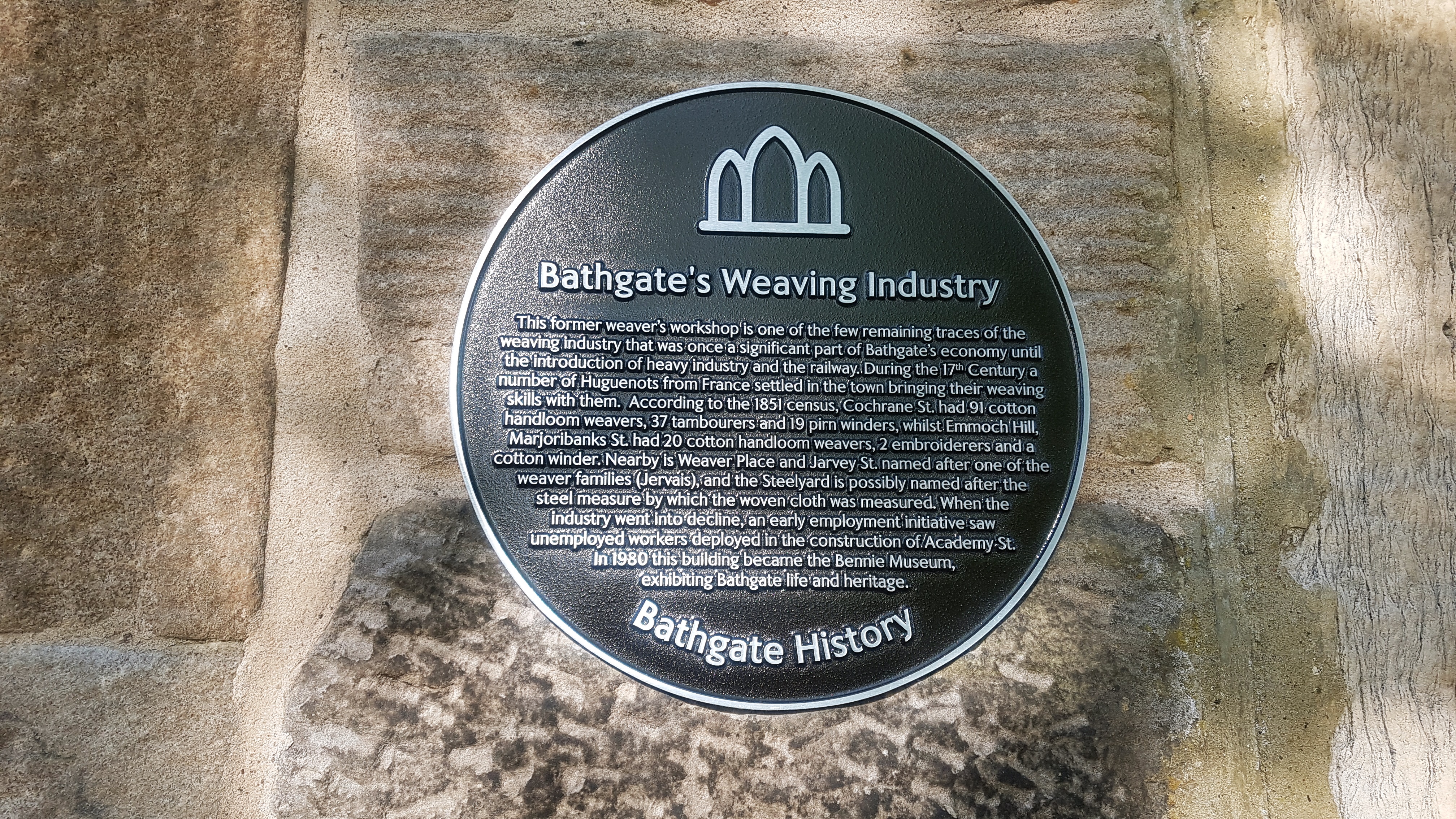
This former weaver’s workshop is one of the few remaining traces of the weaving industry that was
once a significant part of Bathgate’s economy until the introduction of heavy industry and the
railway. During the 17th Century a number of Huguenots from France settled in the town bringing
their weaving skills with them. According to the 1851 census, Cochrane St had 91 cotton handloom
weavers, 37 tambourers and 19 pirn winders, whilst Emmoch Hill Marjoribanks St had 20 cotton
handloom weavers, 2 embroiderers and a cotton winder. Nearby is Weaver Place and Jarvey Street,
named after one of the weaver families (Jervais), and the Steelyard is possibly named after the steel
measure by which the woven cloth was measured. When the industry went into decline, an early
employment initiative saw unemployed workers deployed in the construction of Academy St.
 Mark as Visited
St. Marys RC Church
Bathgate
Majestic and serene, St. Mary’s RC Church graces Bathgate's skyline with its timeless architecture and spiritual significance. A sanctuary of faith and community, its doors welcome all, offering solace and connection amidst the rhythms of daily life.
Points of interest on route
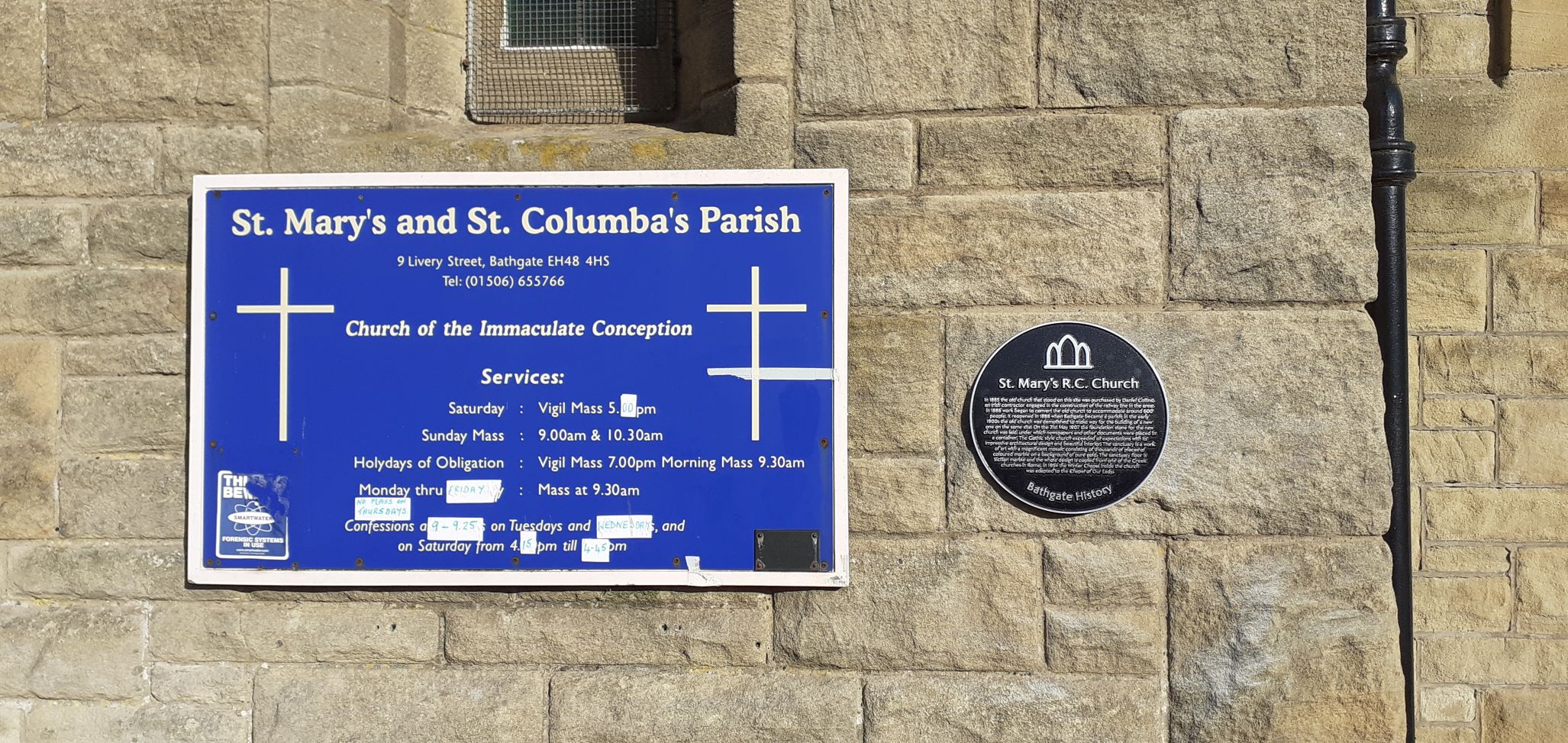
In 1885 the old church that stood on this site was purchased by Daniel Collins, an Irish contractor engaged in the construction of the railway line in the area. In 1886 work began to convert the old church to accommodate around 600 people. It reopened in 1888 when Bathgate became a parish. In the early 1900s the old church was demolished to make way for the building of a new one on the same site. On the 21st May 1907 the foundation stone for the new church was laid, under which newspapers and other documents were placed in a container. The Gothic style church exceeded all expectations with its impressive architectural design and beautiful interior. The sanctuary is a work of art with a magnificent mosaic consisting of thousands of pieces of coloured marble on a background of pure gold. The sanctuary floor is Sicilian marble and the whole design is copied from one of the Greek churches in Rome. In 1954 the Winter Chapel inside the church was adapted to the Chapel of Our Lady.
 Mark as Visited
Bathgate Working Men's Institute
Bathgate
The heartbeat of Bathgate's community, the Working Men’s Institute stands as a bastion of camaraderie and learning. From its humble beginnings to its present-day embrace of knowledge and fellowship, it embodies the spirit of empowerment and unity.
Points of interest on route
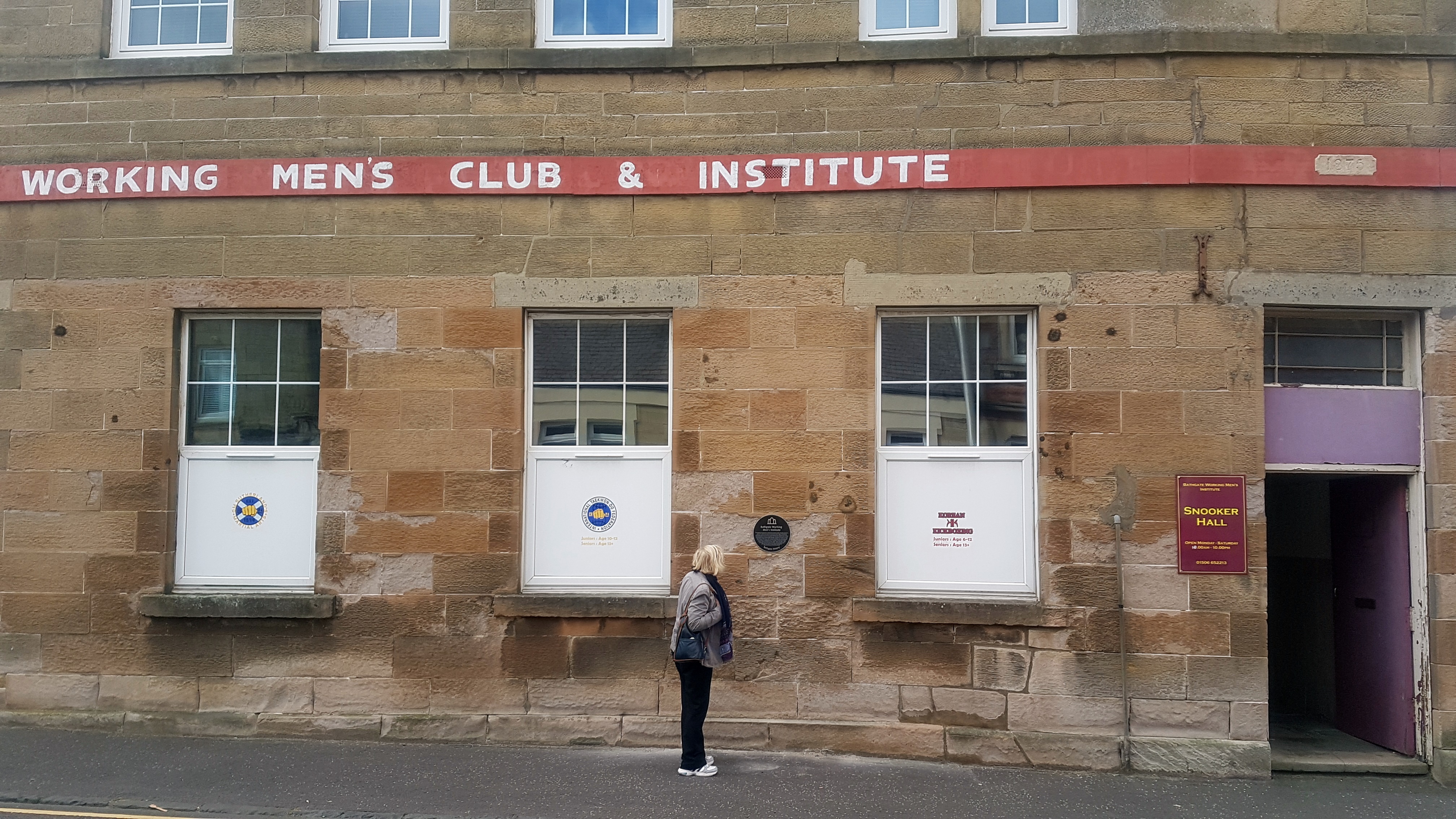
The Bathgate Working Men’s Institute first opened in1866. Draughts, dominoes, chess and carpet bowls were purchased and a wide range of periodicals, indicating a high level of literacy of the working man in Bathgate at the time. Operating initially from the Co-operative Hall, the £200 building costs for these new premises were loaned by Peter McLagan, Scotland’s first mixed race MP and the Institute moved here in 1875 when billiards were introduced, and later snooker. The upper floor snooker rooms have been since enjoyed by generations of Bathgate Bairns. The Burgh Court sat here in 1910, it was a Labour Exchange from the 1920’s – 1942. From 1945 – 1975 it was let to Marlock Hosiery Company, and since then to the Bathgate Tae Kwon Do Club, where Grand Master Sheena Sutherland (1958-2019) trained.
 Mark as Visited
High Church of Scotland
Bathgate
Towering with stately grace, the High Church of Scotland presides over Bathgate's landscape, a beacon of faith and tradition. With its storied history and enduring presence, it offers solace and sanctuary to all who seek spiritual nourishment and guidance
Points of interest on route
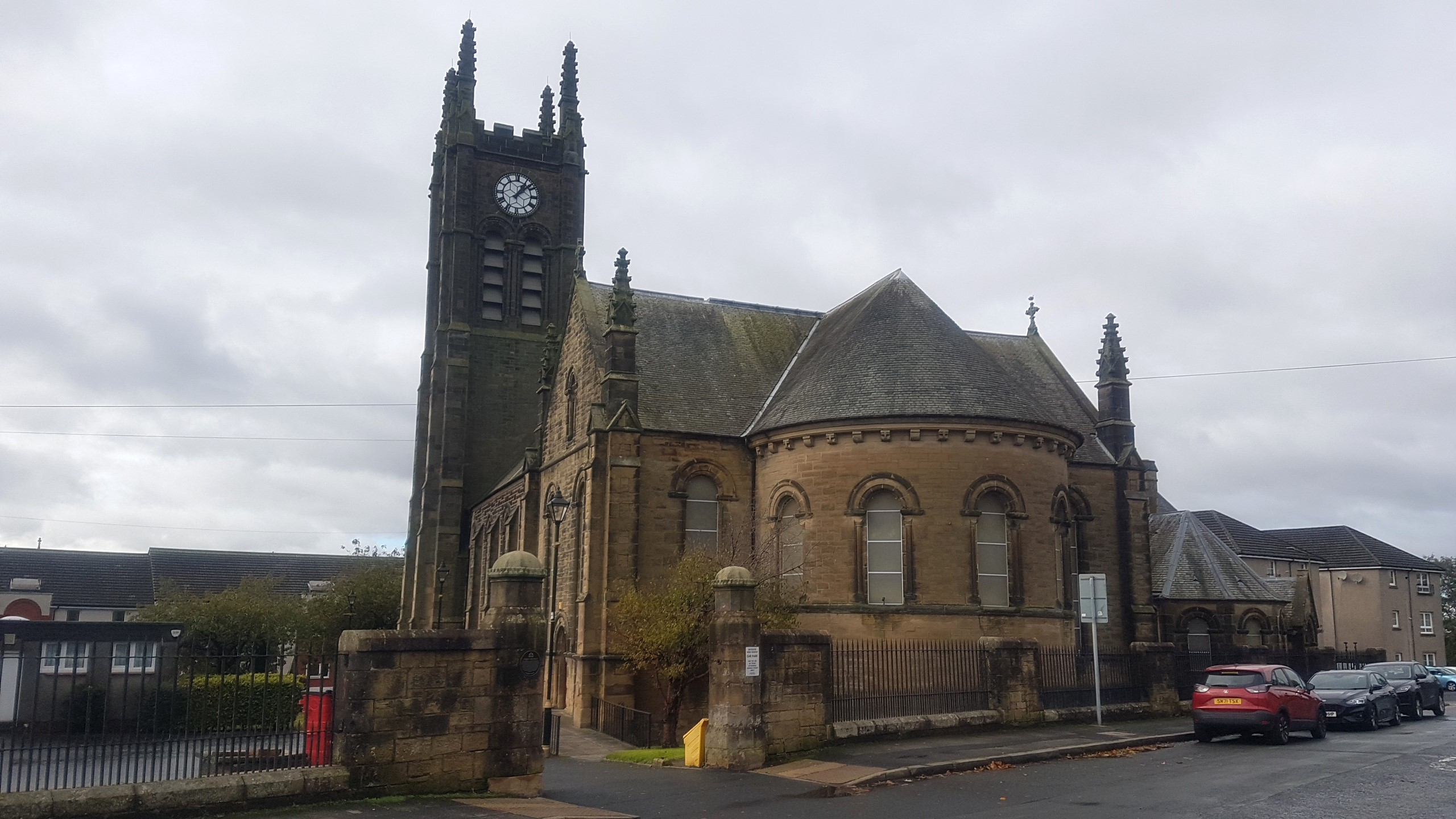
The ruins of Bathgate’s first church can be seen outside the town centre, opposite the Kirkton Park Arches on land granted to the monks of Holyrood Abbey by Malcolm IV in 1160. A second church was built (post the 1569 Reformation) in Hill St between 1595 and 1618. Later another new church and churchyard was built in 1739 on this site, and finally this stunning Romanesque High Church was completed in 1884. Its fine town clock continues to be significant landmark to all Bathgate Bairns. The High Church’s first organ was installed in 1899. In 1921 a stunning marble slab memorial was placed in the outer vestibule with the names of the 90 parishioners who paid the ultimate sacrifice, with the addition in 1945 of the 19 men of the congregation who died in WW2. The “new” church hall was opened in 1965.
 Mark as Visited
Glenmavis Distillery
Glenmavis Tavern, Gideon Street
Steeped in the art of whisky-making, Glenmavis Distillery is a testament to Bathgate's rich tradition of craftsmanship and innovation. From grain to glass, its spirits capture the essence of the land, inviting connoisseurs to savor the flavors of Scotland's liquid gold.
Points of interest on route
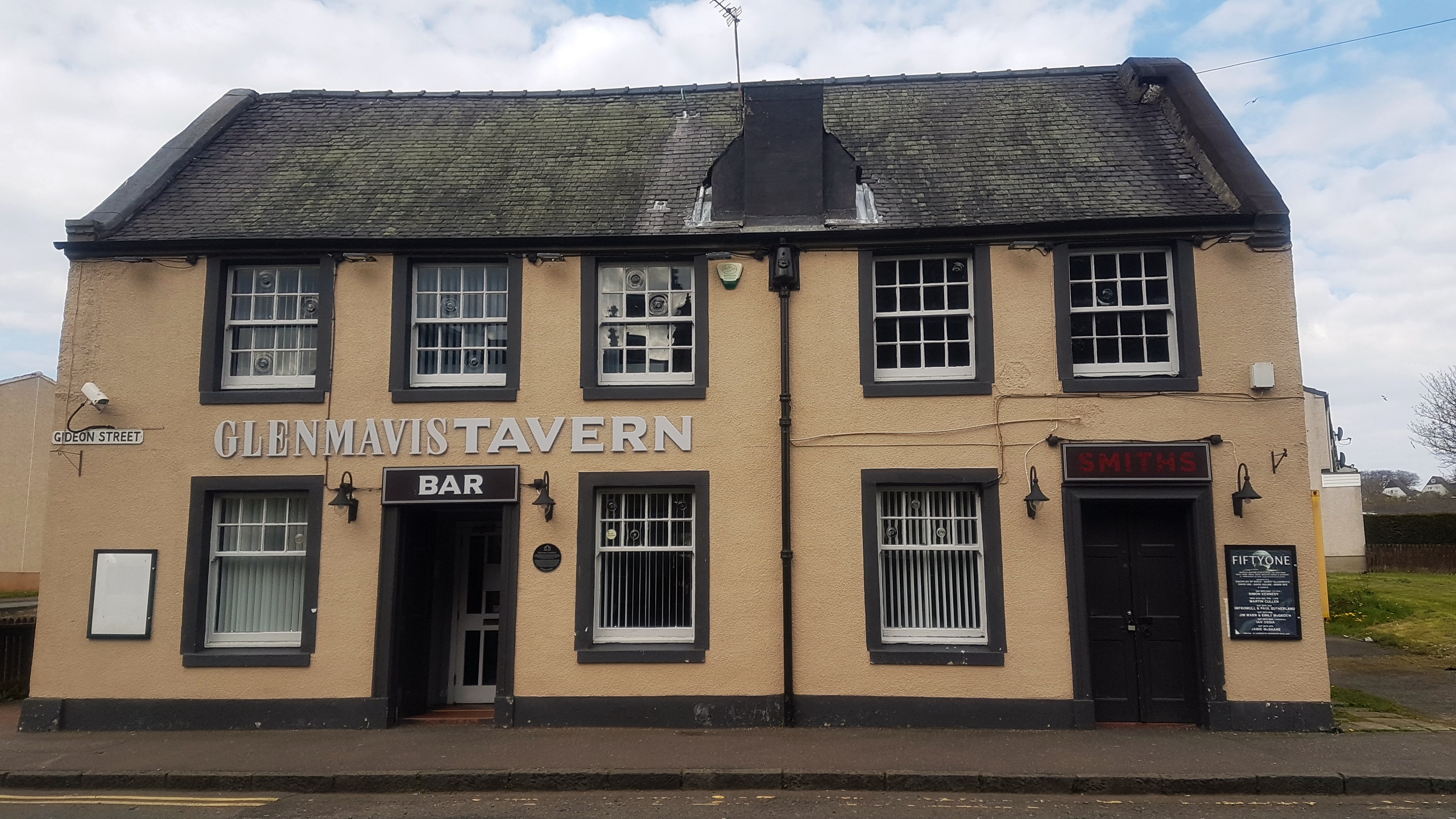
A high quality, pure malt whisky, marketed latterly as McNab’s Celebrated Glenmavis Dew, was once produced at a distillery near here. The Glenmavis Distillery stood opposite the present Balbardie Park in the area now occupied by housing in The Glen and Mavis Bank. It was producing 80,000 gallons of whisky a year by the 1880s and employed 16 men and three excise officers.
Established around 1783, its first distiller was David Simpson, father of Sir James Young Simpson, a significant figure in the history of medicine. Simpson’s tenancy lasted until 1829, however repeated increase in excise duty to fund the Napoleonic Wars, and the inaccessibility of foreign ports for exporting contributed to his lack of success. The last owner was John McNab, tenant from 1834 to 1910 when the distillery was finally closed. An unsuccessful attempt to reopen it in 1956 resulted in its demolition in 1957. The Glenmavis Tavern, first opened in 1825, keeps the name of Bathgate’s distillery prominent to this day.